1907 1922
THE GREAT POPULAR SAGE
In 1907, the Junta para Ampliación de Estudios e Investigaciones Científicas (JAE) (Board for the Advancement of Studies and Scientific Research) was established, with Cajal appointed as its president, and he was elected a full member (seat no. 34) of the Royal Academy of Medicine. During these years, Cajal held various positions as part of his commitment to science and Spanish society and published seminal works such as Histologie du système nerveux de l’homme et des vertébrés in 1911, a revised French edition of the 1904 Spanish original.
Not only was 1906 the year he won the Nobel Prize, it was also the year that Cajal came closest to succumbing to political temptation. As he recounts himself, he nearly accepted the position of Minister of Public Instruction and Fine Arts, which his friend Segismundo Moret had offered him.
He was a man deeply committed to his time, not just a great scientist. A regenerationist in action after the Disaster of ’98, he later became a driving force behind the modernisation of Spain through educational and research policy. In these fields, he held numerous public offices: Councillor of Public Instruction from 1898, director of the Institute of Hygiene from 1899 to 1920, director for life of the Biological Research Laboratory (Cajal Institute from 1920 onward) since its founding in 1900, president of the Board for the Advancement of Studies and Scientific Research from its inception in 1907 until his death and a senator from 1908.
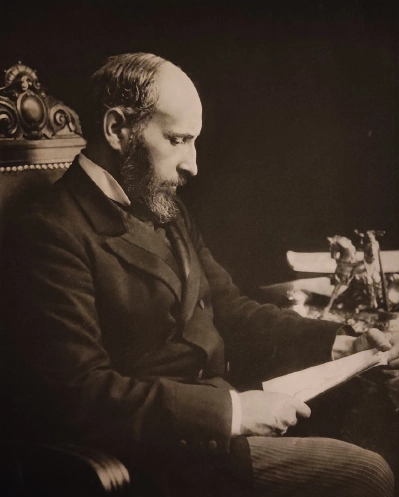
Santiago Ramón y Cajal reading
CAJAL AS A WRITER
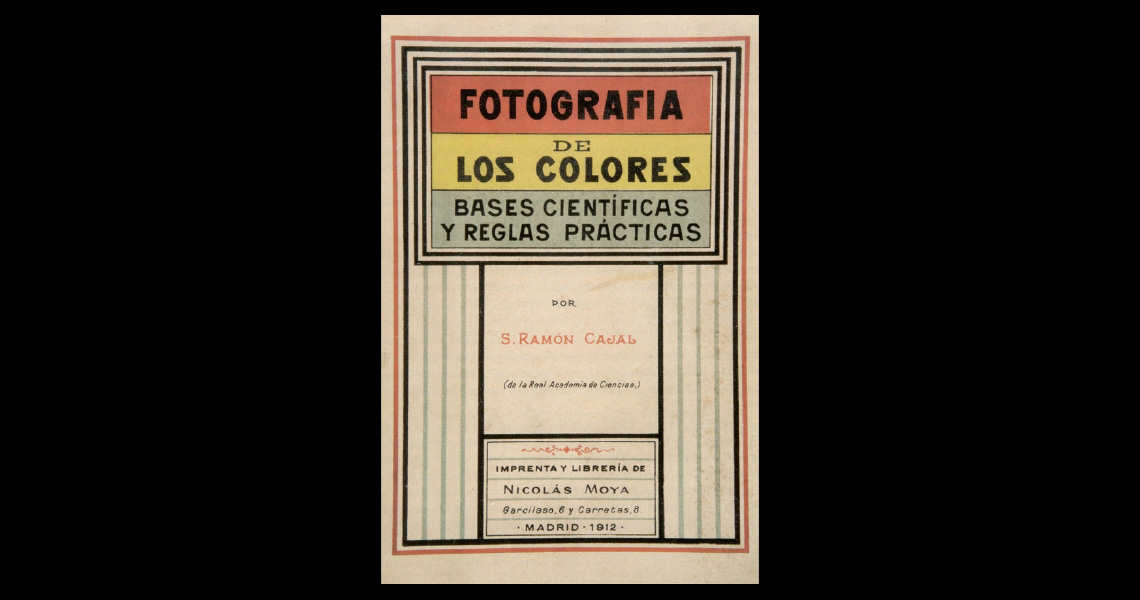
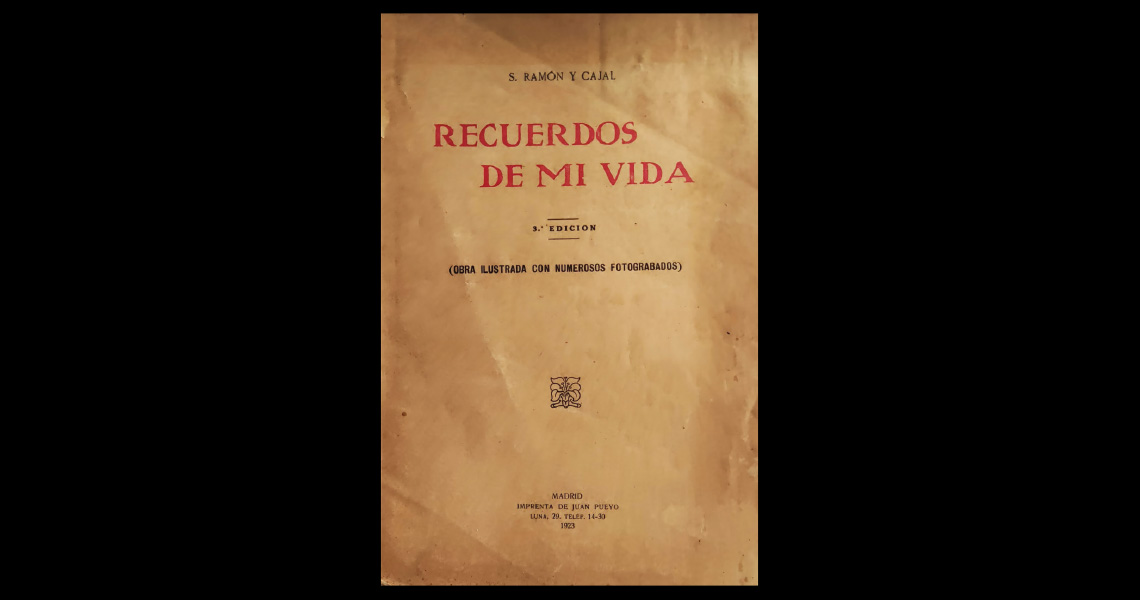
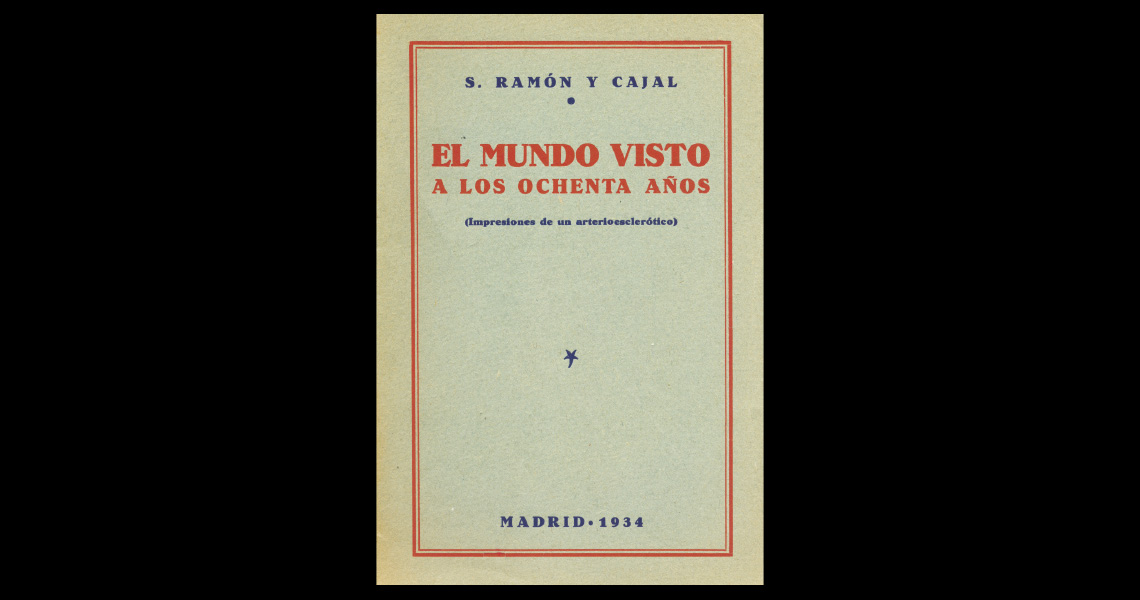
In addition to his outstanding scientific achievements, Santiago Ramón y Cajal left a significant mark in the literary world. His writings span a wide range of genres and themes, demonstrating his versatility as an author. In Cuentos de vacaciones (Vacation stories: Five science fiction tales), he crafts worlds that move between the fantastical and the scientific, blending his imagination with his scientific knowledge. He also explored the topic of perception and vision in La fotografía de los colores (The photography of colours). His autobiographical works, such as Recuerdos de mi vida (Recollections of my life) and El mundo visto a los 80 años (The world as seen at eighty), reveal his personal experiences and reflections. These writings offer a unique insight into Cajal’s life and work, allowing us to understand his motivations and inspirations. In Charlas de café (Coffee chats), Cajal shares thoughts, anecdotes and confidences that he describes as “circumstantial, inconsistent reactions that vary with the mood of the moment and the spirit of the occasion”. Through these works, Cajal demonstrated his ability to combine scientific rigor with captivating and creative prose.
![El fabricante de honradez. Cuentos de vacaciones, 1905. [Ediciones pulga, 1953-1958]](https://espaciocajal.com/wp-content/uploads/2025/12/cajal_escritor_03.jpg)
![La casa maldita. Cuentos de vacaciones, 1905. [Ediciones pulga, 1953-1958]](https://espaciocajal.com/wp-content/uploads/2025/12/cajal_escritor_04.jpg)

CAJAL'S SCHOOL OF NEUROSCIENCE
Santiago Ramón y Cajal founded an extraordinary school, possibly the most significant in the history of biomedicine, which was cut short by the Civil War. Where would Spanish science be today if the tradition of his School had been able to continue? And what if a second Nobel Prize had gone to Río Hortega, De Castro or Lorente de Nó? UNESCO’s Memory of the World Programme recognises the legacy of Cajal and his School, an honour reserved for very few scientists, and determined in 2017 that “these archives are essential for the study of the history of the discoveries and theories that led to the current understanding of the human brain in two respects: anatomical composition (individual cells) and physiological properties (the formation of circuits and the propagation of nerve impulses)”.
The greatest glory of a teacher lies not in training disciples who follow him, but in training scholars who surpass him.
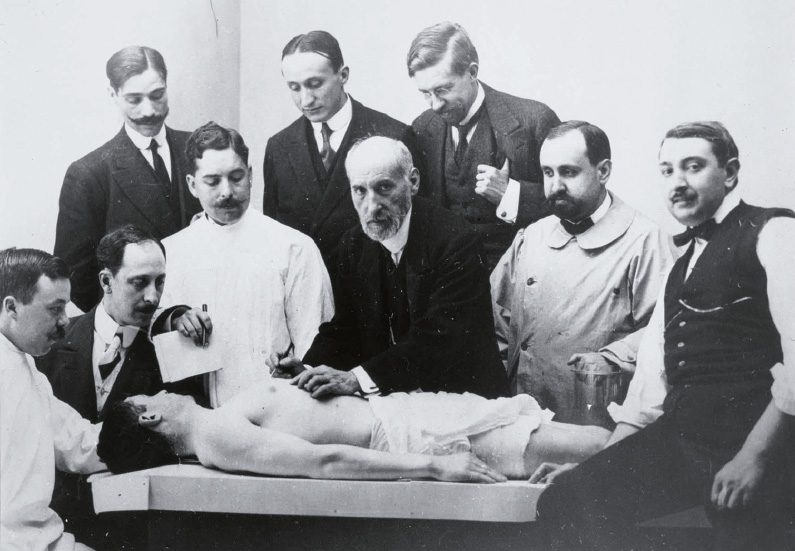
Alfonso Sánchez García, Santiago Ramón y Cajal’s dissection class, 1915

Pedro Ramón y Cajal
He played a pivotal role in his brother Santiago’s career. We cannot consider him a direct disciple, but rather a close collaborator. While working as a rural physician, he conducted highly significant research on the comparative histology of the nervous systems of fish, amphibians, reptiles and birds, which proved to be fundamental to Cajal, who stated: “In the conclusions of my work, I described in detail the course taken by the visual pathway, confirming my brother’s views”. He was a professor of Histology at the University of Cádiz (1896) and, later, of Gynecology at the University of Zaragoza (1899). Although he continued to conduct neurohistological research even after the Civil War, his primary focus was on patient care.
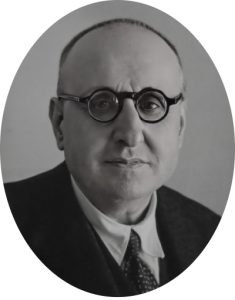
Jorge Francisco Tello
A native of Alhama de Aragón (Zaragoza), he was the first researcher to join the Biological Research Laboratory in 1902, becoming the first member of the Cajal School. He was the first scientist to demonstrate that the central nervous system of an adult can regenerate, a feat that Cajal described as “an experimental achievement never equalled by anyone”. Following Cajal’s retirement and death, he succeeded him in his main academic and research positions.
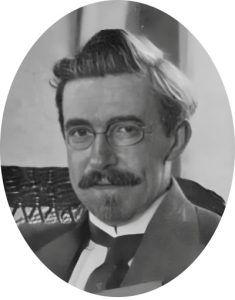
Nicolás Achúcarro
In 1911, after training under some of Europe’s most distinguished specialists in neuropathology and neuropsychiatry, such as Alzheimer, and serving as director of the Government Hospital for the Insane (Washington, D.C., U.S.), he joined Cajal’s laboratory to establish a new histopathology department. He developed a staining method and studied granulo-adipose cells. His findings convinced Cajal, who in 1913 introduced the concept of the “third element” of the nervous system. He was a pioneer in suggesting that glial cell dysfunction can cause disease without prior primary damage to neurons. He fell ill at a very young age and died in 1918. This was a tremendous loss for Cajal and his School, which he was destined to lead.

Pío del Río Hortega
He improved Achúcarro’s staining method and discovered that the “third element” is actually composed of two different cell types of distinct origin: microglia and oligodendrocytes. It is, without a doubt, one of the most fundamental discoveries in neuroscience and earned him nominations for the Nobel Prize in 1929 and 1937. He directed the laboratory at the Residencia de Estudiantes, was appointed head of the Research Division at the Spanish National Cancer Institute, and developed a classification system for tumours of the nervous system that remained in use until a few years ago. With the outbreak of the Civil War, he went into exile and, after spending time in France and the United Kingdom, ended up in Buenos Aires, where he left behind many distinguished disciples.

Fernando de Castro Rodríguez
When Achúcarro fell ill, Cajal—well aware of the technical skill of the young Madrid native Fernando de Castro—brought him on as a resident student in his department. At the Cajal Institute, he was responsible for training domestic and foreign researchers in neurohistological techniques. He described the basic principles of innervation in the cardio-aortic region and was the first to identify the chemoreceptors located in the glomus caroticum. Following his visits to the laboratory, he guided Corneille Heymans towards the study of the glomus caroticum as the centre of chemosensory reflexes. For this research, the Belgian scientist was awarded the Nobel Prize in 1938, while De Castro and Tello were guarding the Cajal Institute in war-torn Madrid.

Rafael Lorente de Nó
While he was a student in Zaragoza, he caught the attention of Pedro Ramón y Cajal, who recommended him to his brother. In Madrid, he produced a brilliant description of the histology of the acoustic-vestibular nuclei, which brought him international fame. With a scholarship from the JAE, he went abroad to work with the Vogts in Germany and with Nobel laureate Róbert Bárány in Sweden. In 1929, he returned to Spain to head the first otolaryngology department in Santander, where he set up a histology and physiology laboratory. In 1931, he left for the United States for good, first going to the Central Institute for the Deaf and later to what is now Rockefeller University. He made major discoveries; particularly significant was his research on the functional organisation of the cerebral cortex and the physiology of nerve impulses. He was nominated for the Nobel Prize in 1949, 1950, 1952 and 1953.
CAJAL'S SCHOOL, AS DEFINED BY HIMSELF IN 1922
On the occasion of receiving the Echegaray Medal, awarded by the Royal Academy of Sciences