1854 1869
THE SEEDS OF A REBELLIOUS SCIENTIST
The family’s various moves throughout the Aragon region (Larrés, Luna, Valpalmas, Ayerbe, Gurrea de Gállego) and those of Santiago himself due to his studies (Jaca, Huesca) allowed him to develop a keen sense of curiosity which, combined with his personality, filled his childhood with adventures, mischief and experiences.
Three events during Santiago Ramón y Cajal’s childhood had a decisive impact on the development of his character. First of all, the celebrations held to commemorate the Spanish victories in Africa stirred his patriotic fervour. Second, the lightning strike on the church and school in Valpalmas—which resulted in the tragic death of a priest, injured a teacher and caused great fear among the students—left a deep impression on him. Finally, the solar eclipse of July 18, 1860, which had been previously announced in the press, led him to reflect on the value of science: “I finally realised that man, helpless and defenceless in the face of the unstoppable power of cosmic forces, finds in science a heroic and powerful redemptive instrument of foresight and mastery”.
His curiosity was closely linked to his boundless creativity. “Nothing could satisfy my tireless pencil”, Cajal wrote, referring to his childhood love of drawing. Painting came next, and he was on the verge of pursuing a career in art, but Don Justo, his demanding father, wouldn’t let him. However, his artistic skills would later prove crucial in his ability to draw and interpret, in great detail, what he saw under the microscope. For his part, photography filled him with “inexpressible wonder”, and he was fascinated not only by the images themselves but also by the technical processes involved, in which he became a true master and pioneer. His family portraits, travels and his mastery of early colour photography prove it. Writing also gave him pleasure from an early age.
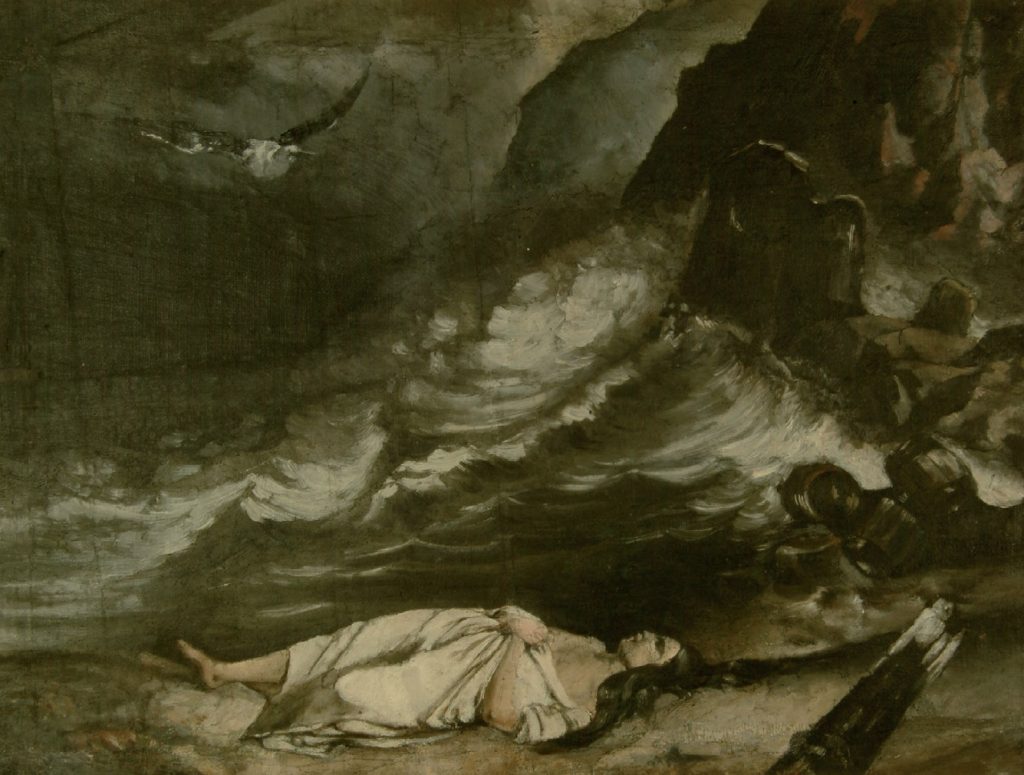
Santiago Ramón y Cajal, A painting inspired by Romanticism.
Oil on panel, 24.5 x 34.5 cm. Cajal-CSIC Legacy
I was perhaps eight or nine years old when I developed an irresistible mania for staining paper, tracing scribbles in books and smearing the town’s newly whitewashed walls, doors and facades with all manner of graffiti, wartime scenes and bullfighting episodes. A smooth, white wall held an irresistible fascination for me.


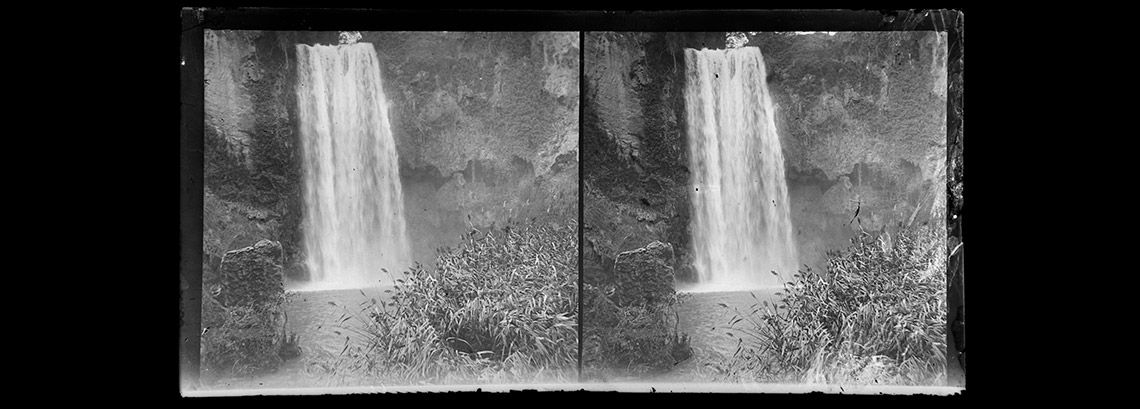


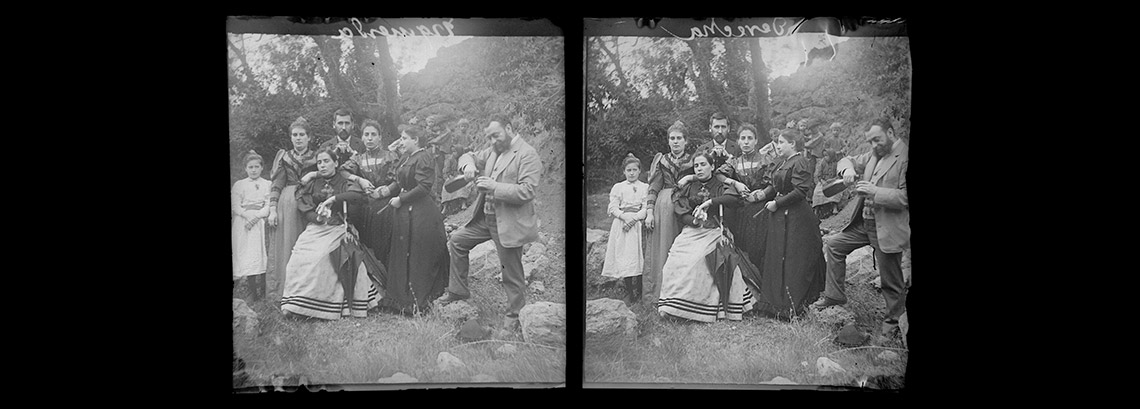
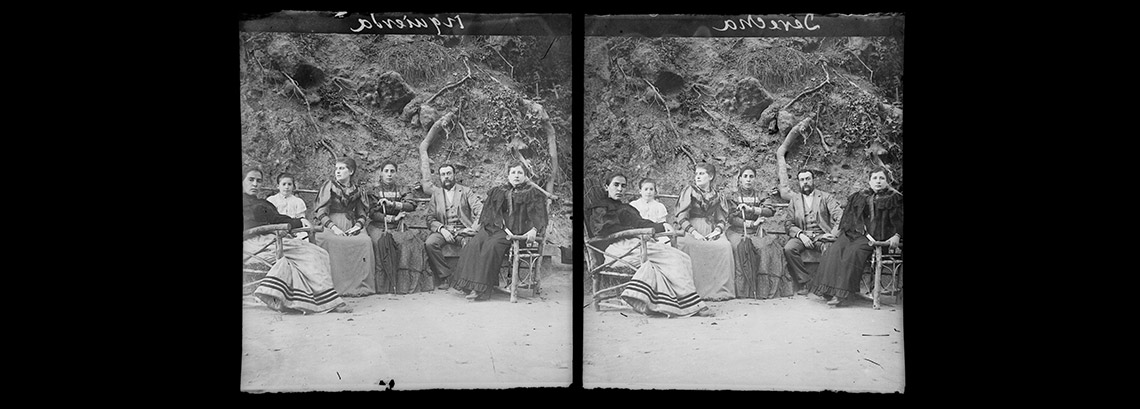
Throughout his life, Cajal owned several cameras of various formats, including some stereoscopic ones. However, the Verascope stood out as one of his favourites because of its compact size and versatility, especially during his travels and outings.
Stereoscopic photography, which dates back to the 19th century, is a technique that captures three-dimensional images by using two photographs taken from slightly different angles. It is based on human binocular vision, in which each eye sees a different image that the brain merges to create a sense of depth. To do this, special cameras with two lenses are used, and the images can be seen through stereoscopic viewers.

Richard Verascope Stereoscopic Camera, Paris, 1911. Serial No. 23195. University of Zaragoza Collection
I widened the hole and noticed that the figures were becoming vague and hazy; I narrowed the gap in the window using pieces of paper stuck together with saliva and observed, with great satisfaction, that as the gap shrank, the figures grew in vitality and detail… I decided to take advantage of my unexpected discovery. Sitting on a chair, I amused myself by tracing those vivid, brilliant images onto paper; they seemed to comfort me, like a caress, in the solitude of my prison cell.