BIOGRAFÍA DE SANTIAGO RAMÓN Y CAJAL

CHAPTER 7

1900 1906

ACADEMIC ACHIEVEMENTS

At the International Congress of Medicine held in Paris in 1900, Cajal received the Moscow Prize for the best medical research publication of the past three years. In Spain, a public campaign began in the press calling for resources to be provided to Cajal so that he could advance his research, and the government established the Laboratorio de Investigaciones Biológicas (Biological Research Laboratory), placing it under his direction. That same year, he published what would become a fundamental source for his biographical study: Recuerdos de mi vida. Mi infancia y juventud (Recollections of my Life. My infancy and youth), which he would complete in 1917 with Historia de mi labor científica (The history of my scientific work). His national and international recognition grew, reaching its peak in 1906 when he was awarded the Nobel Prize.

Santiago Ramón y Cajal achieved his first major international academic success in Germany in 1889, when he convinced Kölliker of the validity of his findings. In 1894, the Royal Society of London commissioned him to deliver the opening lecture of the academic year, and the University of Cambridge awarded him an honorary doctorate. It would be the first of many.

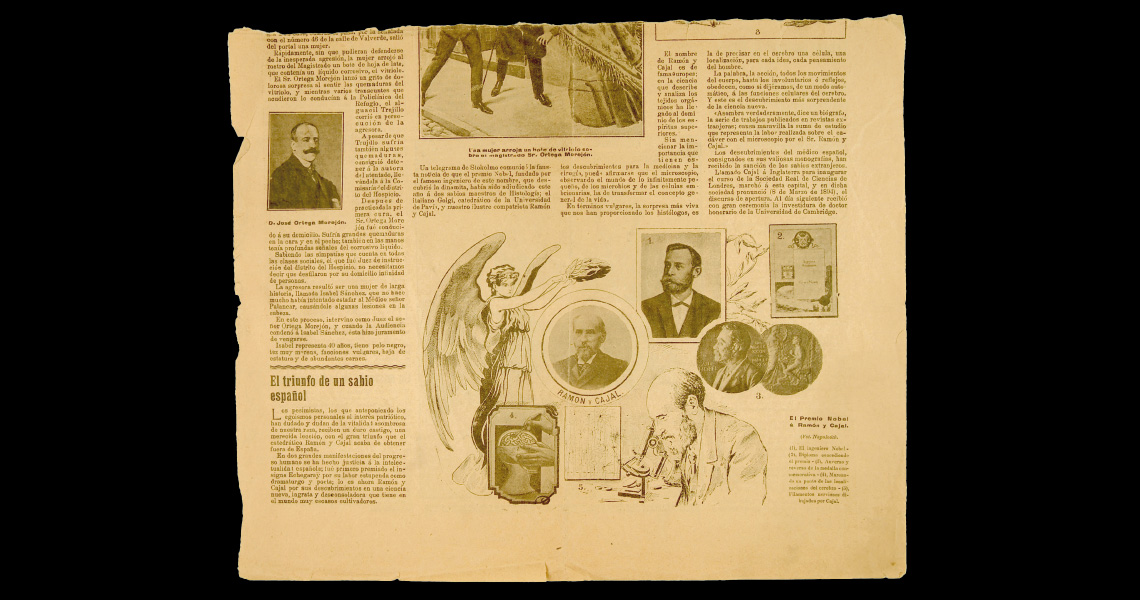
Following his recognition abroad, Cajal gained public prominence in Spain. In 1900, he won the Moscow Prize in Paris, and the Biological Research Laboratory was established. In 1905, he received the Helmholtz Medal in Germany and in 1906, the Nobel Prize in Physiology or Medicine.

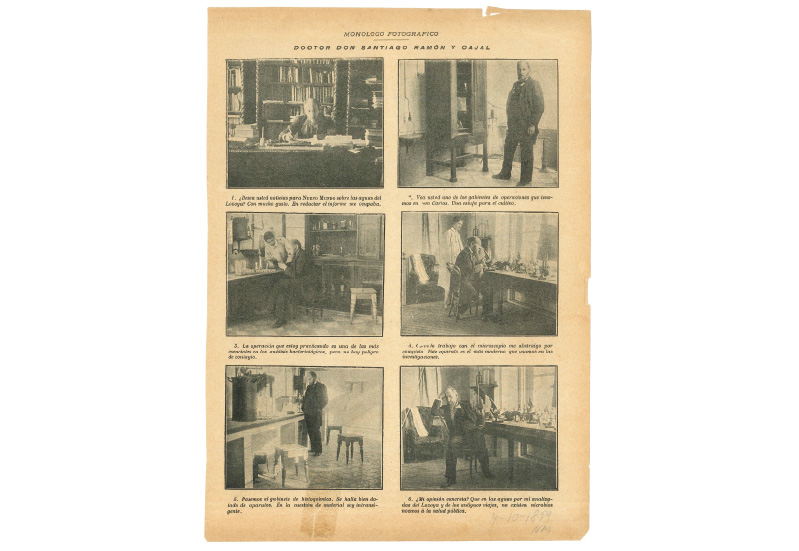
“Monólogo fotográfico” (A Photographic Monologue). Dr Santiago Ramón y Cajal, Nuevo Mundo, 4 October 1899

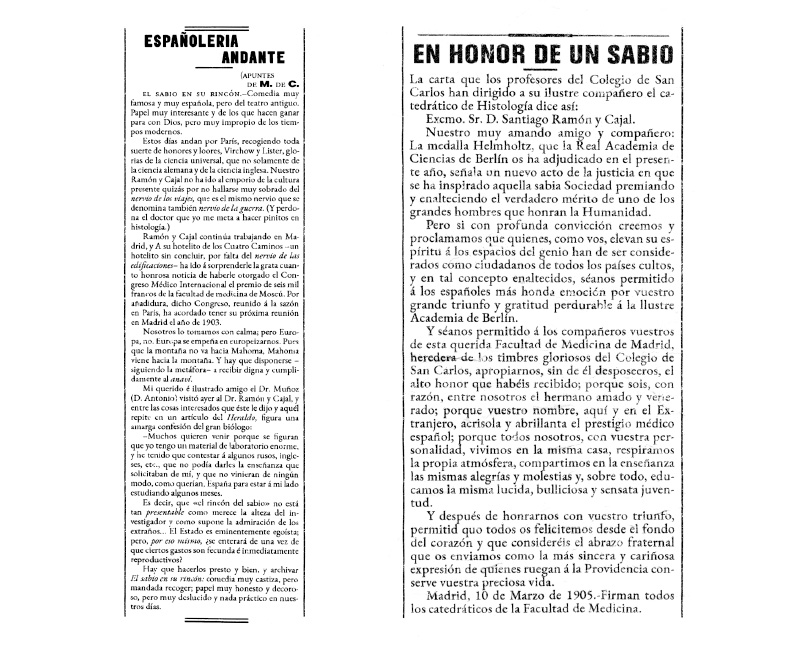
Mariano de Cavia, “Españolería andante” (An errant Spanishness), El imparcial, August 10, 1900
“El honor de un sabio” (The honour of a scholar), Heraldo de Madrid, March 14, 1905

ARAGONESE HONOURS

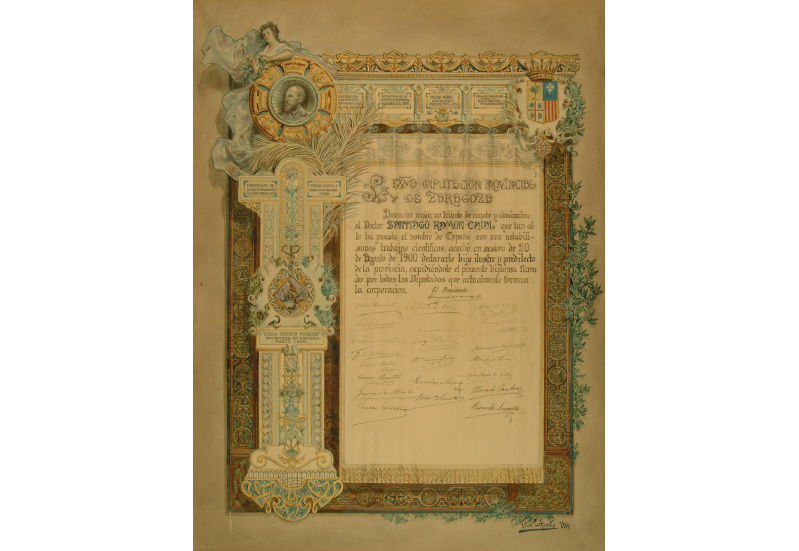
Ramón y Cajal was recognised by various institutions in Aragon very early. In 1885, in response to a cholera epidemic, the Provincial Council of Zaragoza commissioned him to conduct a study and presented him with a magnificent Zeiss microscope, which, as Cajal himself wrote, “contributed most effectively to my future scientific work”. In 1900, the same organisation awarded him the title of Distinguished and Beloved Son of the province. In 1901, the Zaragoza City Council named the first street in the world after him and in 1905, it named him an Honorary Citizen. Medical students gave him a plaque to celebrate his Nobel Prize, and several organisations, along with numerous Aragonese cultural centres worldwide, appointed him an honorary member.

Certificate of Appointment as an Illustrious and Beloved Son of the Province of Zaragoza, 1900

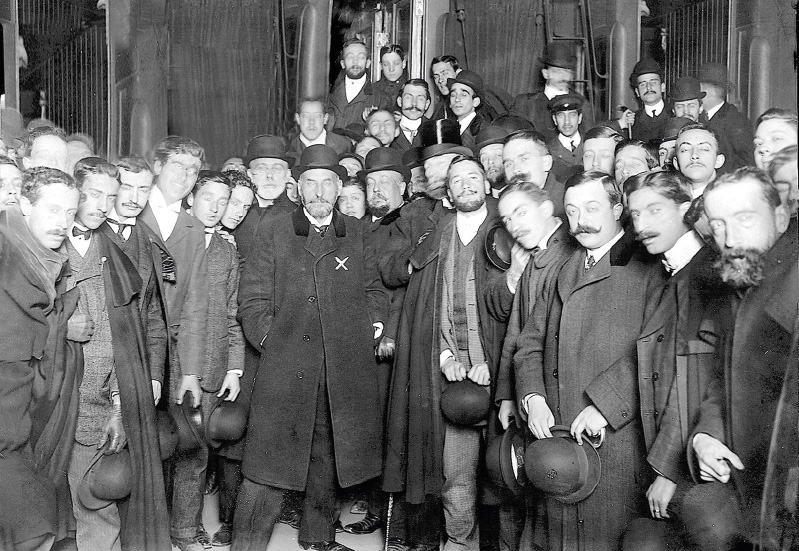
A farewell gathering organised by students from Madrid in honour of the eminent scholar Dr. Ramón y Cajal at the Estación del Norte, from where he departed for Stockholm to receive the Nobel Prize in Medicine, 1906

THE NOBEL PRIZE

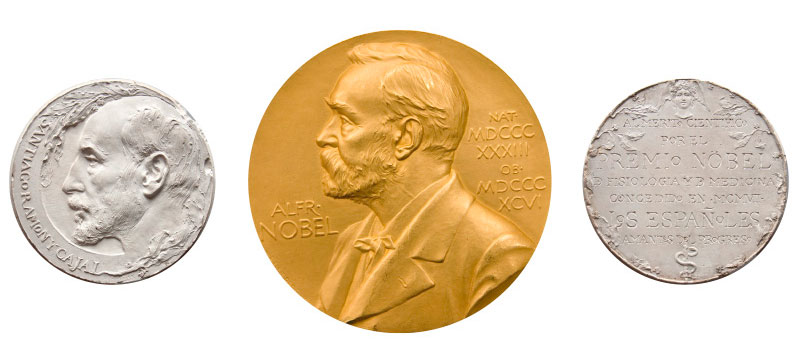
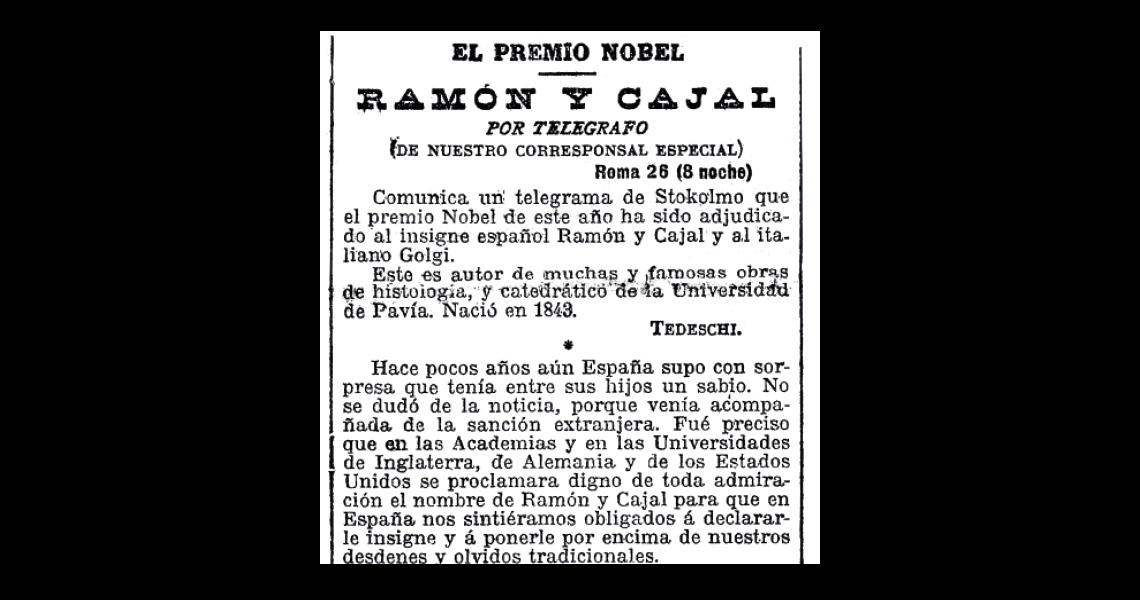
On Saturday, October 27, 1906, the afternoon newspapers reported the arrival of a telegram from Stockholm stating that the Nobel Prize in Physiology or Medicine had been awarded to the Spaniard Santiago Ramón y Cajal and the Italian Camillo Golgi. Students, professors, doctors, associations and a wide variety of institutions across Spain led the celebrations. The students called for the street named Atocha in Madrid to be renamed Doctor Cajal. The committee of dignitaries proposed minting a commemorative medal—funded by public subscription and sculpted by Benlliure—which bore the inscription “To scientific merit for the Nobel Prize… From the Spanish lovers of progress”.

On December 1, he left for Stockholm, seen off by a crowd of students and on the 10th he received the award. He stayed in Sweden for a few days, giving lectures and attending official receptions. He brought back from Sweden an extraordinary impression of the country, its authorities and his colleagues, alongside an irritated disappointment with Golgi, who “displayed such immoderate haughtiness and egocentrism that it produced a deplorable effect on the audience”.
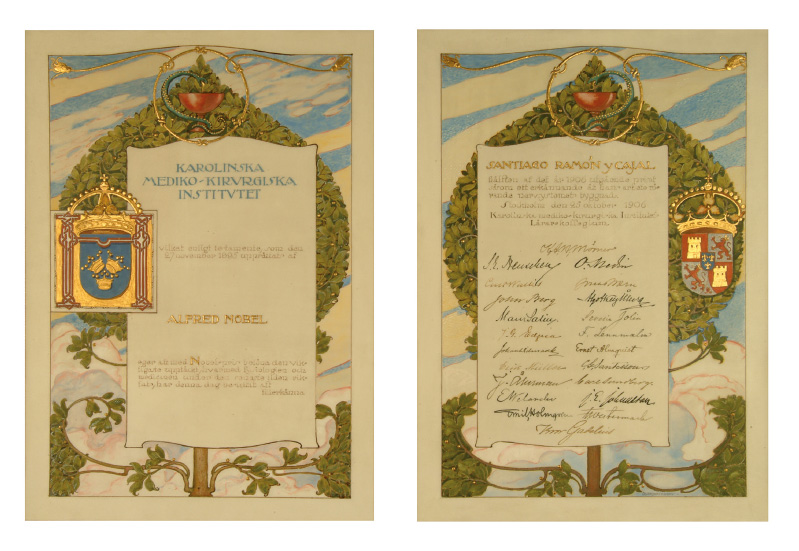
Nobel Prize in Physiology or Medicine diploma and medal awarded
by the Royal Carolingian Medical-Surgical University, Stockholm, Sweden,
to Santiago Ramón y Cajal, 1906

Mariano Benlliure, Commemorative Medal for Scientific Merit from the Nobel Prize, 1907

Selection from the national press, 1906

BIOGRAFÍA